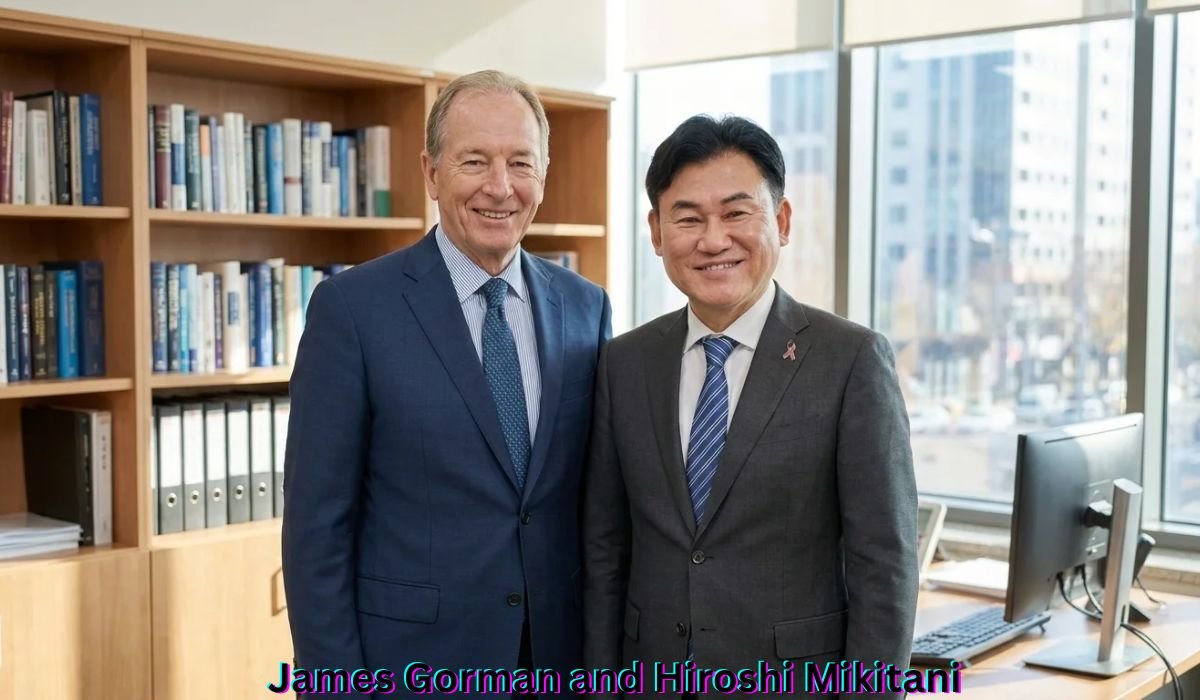
When people search for James Gorman and Hiroshi Mikitani, they usually expect a hidden business deal or a shared boardroom seat. The truth is simpler and more interesting: these two global business leaders built their reputations through completely different paths, yet both shaped how the world thinks about modern corporate leadership.
This article breaks down who each man is, how their careers unfolded, and why James Gorman and Hiroshi Mikitani keep showing up in the same conversation. Think of it as a friendly guide to two very different styles of global leadership, explained without the jargon.
Who Are James Gorman and Hiroshi Mikitani?

James P. Gorman is the Australian-born banker who ran Morgan Stanley from 2010 to 2023 and now serves as The Walt Disney Company’s board chairman. Hiroshi Mikitani founded Rakuten Group in 1997 and still runs it today.
Their titles tell the story. Gorman moved from professional executive to board chairman, while Mikitani remains Representative Director, Chairman, President and CEO of Rakuten, a hands-on operator rather than a hired hand.
Area: Best known for
Gorman: Former CEO, Morgan Stanley
Mikitani: Founder, Rakuten
Area: Current role
Gorman: Chairman, The Walt Disney Company
Mikitani: Chairman, President, CEO, Rakuten
Area: Career start
Gorman: Law, management consulting, banking
Mikitani: Banking, entrepreneurship
Area: Education
Gorman: University of Melbourne; Columbia Business School
Mikitani: Hitotsubashi University; Harvard Business School
Area: Leadership style
Gorman: Professional executive
Mikitani: Founder-led management
What Is the Connection Between James Gorman and Hiroshi Mikitani?

There’s no confirmed direct business partnership, no joint company, and no shared corporate board seat linking these two. Their real bond is reputational: both are respected names in international business circles and both hold profiles with the World Economic Forum.
That overlap fuels search curiosity, but it doesn’t mean a disclosed commercial partnership exists. Instead, James Gorman and Hiroshi Mikitani are best understood side by side as a business leadership comparison, illustrating two paths to corporate governance success rather than one shared venture.
- No verified joint venture or shared company
- Both hold World Economic Forum profiles
- Comparison highlights contrasting global corporate leadership styles
James Gorman’s Career and Morgan Stanley Transformation
Gorman trained as a lawyer in Melbourne, shifted into management consulting at McKinsey & Company, then moved through Merrill Lynch before joining Morgan Stanley in 2006. He became CEO in January 2010, right as the firm was rebuilding after the global financial crisis.
His corporate strategy centered on steadier income. Rather than leaning on volatile investment banking and trading businesses, Gorman pushed Morgan Stanley toward wealth management and investment management, reshaping the bank’s business mix for the long run.
Expansion of Wealth Management
The 2020 E*The TRADE deal added over 5.2 million client accounts and $360 billion in retail client assets. Pairing it with the Eaton Vance acquisition, an investment manager, boosted fee-based advisory fees and gave Morgan Stanley roughly $3.3 trillion in wealth-management operations.
Gorman’s Succession at Morgan Stanley
Succession planning defined Gorman’s exit. Ted Pick became CEO on January 1, 2024, while Gorman stayed on as executive chairman. By January 2025, Pick added the chairman title too, and Gorman became Chairman Emeritus, closing an orderly, well-managed transition.
James Gorman’s Role at Disney
Gorman’s next chapter is Disney. He chaired the company’s Succession Planning Committee before becoming board chairman on January 2, 2025, overseeing governance and oversight rather than daily operations.
That committee work led somewhere concrete. Disney named Josh D’Amaro as CEO, succeeding Bob Iger, effective at the March 2026 annual meeting. Gorman remains Disney’s Board Chairman, focused purely on board leadership and strategic direction.
Who Is Hiroshi Mikitani?
Born in Kobe, Hiroshi Mikitani studied at Hitotsubashi University, worked at the Industrial Bank of Japan, then earned an MBA from Harvard Business School in 1993. He launched what became Rakuten in February 1997.
Unlike Gorman, Mikitani didn’t climb an existing company ladder. He built his own, and it grew into a sprawling operation. Rakuten now describes itself as an ecosystem of over 70 businesses reaching about 2.1 billion people worldwide.
- Founded Rakuten in 1997, still leads it today
- Combines banking background with entrepreneurship
- Represents founder-led expansion rather than inherited leadership
How Mikitani Built the Rakuten Ecosystem
Mikitani’s plan went far past online shopping. The Rakuten Ecosystem now spans e-commerce, fintech, digital content, telecommunications, and more, all designed to keep customers engaged across multiple digital services rather than just one storefront.
The logic is customer lifetime value. A shopper might use Rakuten’s marketplace, collect Rakuten Points, open a Rakuten Bank account, and subscribe to Rakuten Mobile each service deepening customer engagement while lowering customer-acquisition costs across the group.
Segment: E-commerce Example: Online commerce marketplace
Segment: Financial technology Example: Rakuten Bank, securities, credit cards
Segment: Communications Example: Rakuten Mobile, telecommunications
Segment: Loyalty Example: Rakuten Points, loyalty programs
Rakuten’s Current Financial Position
Rakuten posted consolidated revenue of ¥2.497 trillion for 2025, up 9.5% year over year, with IFRS operating income of ¥14.4 billion according to its annual report solid growth across its sprawling digital businesses.
Rakuten Mobile hit a milestone too: full-year EBITDA profitability for the first time, with subscriptions near 10.01 million by December 2025. It still posted a non-GAAP operating loss, showing progress without declaring the mobile business fully healed.
Mikitani’s Ownership Position
Unlike Gorman, who never owned Morgan Stanley, Mikitani holds real equity. A February 2026 disclosure listed him personally with about 8.14% of Rakuten shares, giving him genuine founder ownership alongside his executive title.
Crimson Group, LLC, tied to his business interests, separately held 10.43%. That ownership structure gives Mikitani a level of corporate influence most professional executives, including Gorman at Morgan Stanley, never carried into their leadership roles.
James Gorman and Hiroshi Mikitani: Two Leadership Models
Gorman’s leadership reflects institutional transformation reshaping an inherited financial institution through acquisitions and disciplined succession planning. Mikitani’s leadership reflects the opposite: building something from nothing and staying personally attached to every stage of growth.
Neither approach is superior; they simply answer different governance needs. One fits a mature institution needing stability, and the other suits a fast-moving venture built around long-term founder control and constant reinvention.
Gorman: Institutional Transformation
Gorman didn’t find Morgan Stanley; he reshaped it. Through the E*TRADE and Eaton Vance acquisitions, he shifted revenue sources toward recurring revenue. At Disney, his role is pure corporate governance, guiding strategy without running daily operations himself.
Mikitani: Founder-Led Expansion
Mikitani still owns and operates Rakuten nearly three decades later. His long-term strategy keeps adding businesses, most notably Rakuten Mobile testing how far a founder can stretch one ecosystem across infrastructure, finance, and digital content simultaneously.
What They Have in Common
Both men started in finance-adjacent roles: Gorman in management consulting and banking, Mikitani at the Industrial Bank of Japan. Both also pursued international expansion, studying and working abroad before shaping companies with genuinely multinational businesses.
Both remain fixtures of international business forums too. The World Economic Forum lists profiles for each, cementing their status among recognized names in global corporate strategy, even without any confirmed commercial partnership connecting their companies.
- Finance-rooted early careers
- Track record of international expansion
- Recognized figures in global corporate strategy circles
Major Differences Between Gorman and Mikitani
Gorman was recruited and promoted; Mikitani built his company from scratch and never left. Gorman’s strategic decisions focused on reshaping an existing multinational corporation, while Mikitani’s focused on assembling new businesses around one he personally created.
Their current authority differs sharply too. Gorman’s Morgan Stanley title is honorary, and his Disney seat is board level only. Mikitani, by contrast, still holds full operating leadership authority as Rakuten’s chairman, president, and CEO.
Factor: Founded the company? Gorman: No Mikitani: Yes
Factor: Current authority Gorman: Board chairman (Disney) Mikitani: Operating President and CEO
Factor: Ownership stake Gorman: Professional executive, no founder stake Mikitani: ~8.14% personal shareholder
Factor: Career pattern Gorman: Succession planning, orderly exit Mikitani: Continuous founder-led expansion
Read Also This: Gisele Bündchen & Nathan Blecharczyk: Exploring Their Connection
Why the James Gorman and Hiroshi Mikitani Comparison Matters
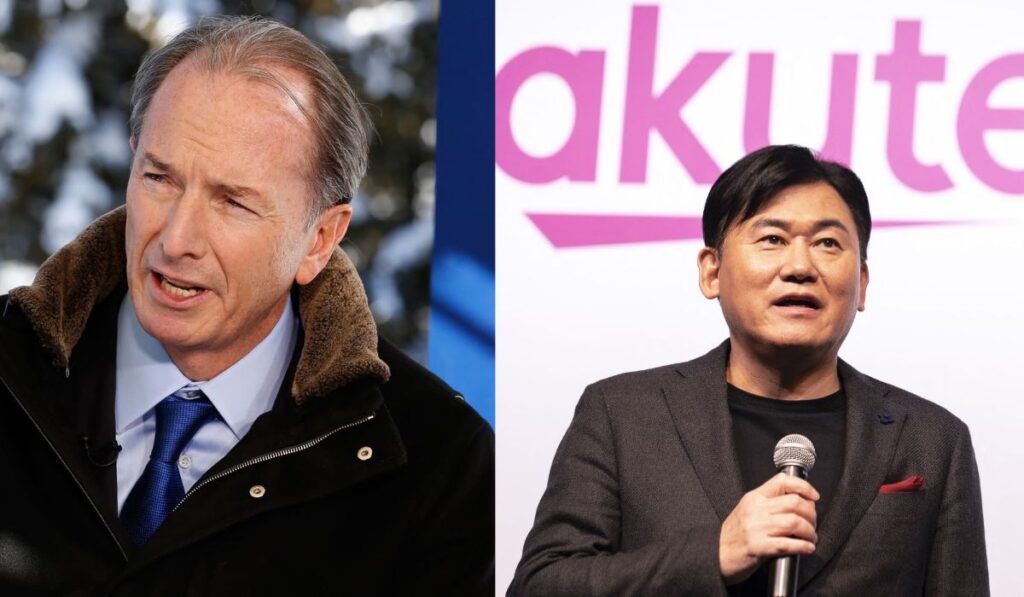
Studying James Gorman and Hiroshi Mikitani together shows two valid routes to building lasting institutions. One relies on professional CEO discipline and corporate governance; the other relies on founder vision sustained over decades of stage of development growth.
Neither model guarantees success on its own. The real lesson is that capital requirements, governance needs, and company maturity should decide the structure, not personal preference, making this comparison genuinely useful for any student of global corporate leadership.
Frequently Asked Questions
Who are these two business leaders?
James Gorman and Hiroshi Mikitani are influential business leaders known for guiding major companies and shaping modern financial and technology industries.
What companies are they associated with?
James Gorman and Hiroshi Mikitani are linked with Morgan Stanley and Rakuten, respectively, two prominent global business organizations.
What is James Gorman known for?
James Gorman and Hiroshi Mikitani are recognized for leadership, with Gorman especially known for his long career at Morgan Stanley.
What is Hiroshi Mikitani known for?
James Gorman and Hiroshi Mikitani are recognized internationally, while Mikitani is especially known for founding and leading Rakuten.
Are they connected professionally?
James Gorman and Hiroshi Mikitani come from different industries, and publicly documented information does not establish a major partnership.
Do they have similar leadership backgrounds?
James Gorman and Hiroshi Mikitani both built notable careers, although their industries, companies, and leadership paths are quite different.
Why are these two names mentioned together?
James Gorman and Hiroshi Mikitani may appear together in searches because both are prominent executives with international business influence.
Final Thought
James Gorman and Hiroshi Mikitani ultimately represent two respected but separate tracks within global business leaders today, one built on institutional transformation, the other on founder-led expansion. Neither man needs the other to validate his success.
What ties James Gorman and Hiroshi Mikitani together isn’t a deal or a handshake, it’s the shared spotlight of global leadership. Their stories, told side by side, offer a clear, practical lesson in how different paths can each lead to lasting corporate leadership.