Parents and teachers searching for honest details will find this Math Playzone Review 2026 useful before diving in with their kids. Instead of another boring worksheet, Math Playzone mixes browser-based games and online activities that turn number practice into something children genuinely want to play and repeat daily.
This Math Playzone Review 2026 also looks past marketing claims to see whether the games actually teach math or simply entertain. From additional races to multiplication battles, the goal is helping kids build real skills through educational games, arcade-style games, and structured game-based learning rather than random screen time.
What Is Math Playzone
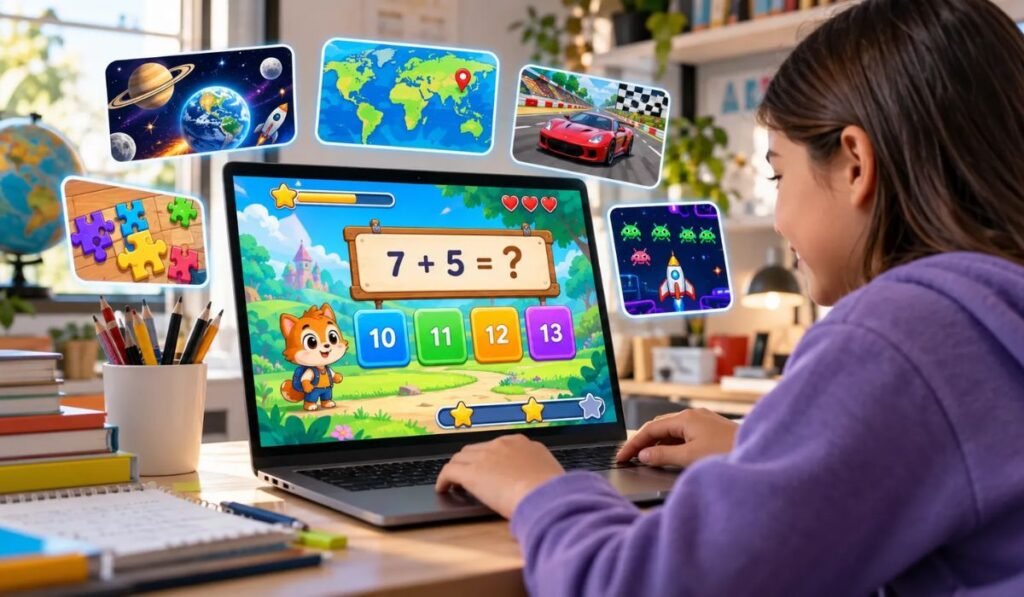
Math Playzone refers to an online destination offering browser games and educational activities for kids. It isn’t a formal curriculum, so parents should confirm whether a specific game actually targets a real math skill before assuming educational value.
Used wisely, it works as a supplementary learning resource alongside classroom instruction. Teachers use short sessions for reinforcement, while parents pick selected math game collections to keep basic skills sharp between lessons and everyday routines.
- Online destination for browser-based games and online activities
- A supplementary learning resource, not a full curriculum
- Best paired with traditional math instruction
- Always check each game’s actual learning objective
What Is Math Playzone Arcade?
Math Playzone Arcade blends educational games with racing games, puzzle games, sports games, and reflex-based games inside one hub. Not every arcade-style game teaches math directly, so checking each title’s objective matters before assuming it builds real number skills.
Short arcade sessions can still help, offering a break between structured activities. The smartest approach is intentional: pick games matching a child’s skill, set time limits, and talk through mistakes instead of chasing high scores alone.
- Combines online game hubs with math-focused titles
- Look for calculation, number comparison, or symbol recognition
- Best used for short, purposeful breaks
- Discuss reasoning, not just final scores
Math Playzone Games and the Skills They Cover
Math Playzone Games and broader math game collections span number recognition, addition, subtraction, multiplication, division, fractions, and mental math. Each title connects on-screen action to a specific skill, turning repeated practice into something closer to play than a printed page.
Grade levels don’t always match ability, so the right game depends on a child’s current needs. Some students still need multiplication facts practice, while others are ready for decimals, ratios, or early geometry challenges.
- Covers addition, subtraction, multiplication, division, and fractions
- Builds number sense and mental math
- Matches skill level, not just age
- Supports steady elementary math progression
| Game | Core Math Skill | Play Format |
| Treasure Quest | Addition & subtraction | Adventure-style |
| Monster Stroll | Number comparison | Visual challenge |
| Ducky Race | Number recognition | Racing |
| Tug Team Multiplication | Multiplication facts | Team competition |
Treasure Quest
Treasure Quest turns addition and subtraction into an adventure-style game, where each correct calculation moves the story forward. This goal-oriented format keeps younger learners engaged while delivering the repetition needed for real math fluency and recall.
Speed shouldn’t be the only focus, though. Encourage kids to explain their thinking rather than guess quickly. Slower, mathematical reasoning-based sessions often build stronger understanding than fast scores while facts are still developing.
- Adventure-style game built on addition and subtraction
- Encourages repetition with immediate feedback
- Best paired with reasoning, not guessing
- Great for younger learners building confidence
Monster Stroll
Monster Stroll is a number comparison game centered on mathematical symbols like greater than, less than, and equal to. Players judge whether a mathematical statement is true, turning simple symbol memorization into genuine reasoning.
Different versions target multiplication or fractions, so the format grows with the learner. This adaptability makes Monster Stroll useful across several skill levels, not just for beginners learning basic comparison.
- Focuses on greater than, less than, and equal to
- Builds understanding of mathematical relationships
- Multiple versions cover multiplication and fractions
- Encourages true reasoning over memorization
Ducky Race
Ducky Race supports early number recognition, helping young learners connect symbols with actual quantities. Racing visuals and simple goals keep attention high, offering repeated practice without every session feeling like a repetitive drill.
Digital practice works best paired with real activities like counting toys or comparing prices. Ducky Race can strengthen number sense, but it shouldn’t be a child’s only exposure to counting and early numbers.
- Builds number recognition and number sense
- Racing format keeps younger learners engaged
- Pair with real-world counting activities
- Ideal starting point for beginners
Tug Team Multiplication
Tug Team Multiplication turns multiplication facts into a competitive tug of war contest. Correct answers power each side forward, making this one of the stronger options for building multiplication fluency through social, team-based practice.
Competition can motivate some kids and stress others, so teachers should emphasize accuracy and improvement over speed. The real goal is familiarity with multiplication facts, not making slower students feel less capable.
- Team-based tug of war multiplication contest
- Strengthens multiplication facts and fluency
- Encourages collaboration with classmates and teammates
- Focuses on accuracy and improvement, not just speed
Math Playzone Skill Levels: Which Games Fit Each Grade
No single game fits every child in a grade, since skills develop at different speeds. Younger learners often need counting, addition, and subtraction, while older students move into multiplication, division, fractions, decimals, and early geometry.
Teachers can match a game’s objective to the current math curriculum for better reinforcement. The smartest approach is identifying the skill gap first, then choosing a game, keeping screen time targeted rather than random.
- Age levels are general guidance, not strict rules
- Younger learners: counting, addition, subtraction
- Older students: multiplication, division, fractions, decimals
- Match games to curriculum for real reinforcement
| Grade Range | Typical Focus | Suggested Game |
| Early elementary | Counting, number recognition | Ducky Race |
| Lower elementary | Addition & subtraction | Treasure Quest |
| Upper elementary | Multiplication & comparison | Monster Stroll / Tug Team Multiplication |
| Late elementary+ | Fractions, decimals, ratios | Advanced Monster Stroll versions |
How Math Playzone Supports Group Learning and Teamwork
Team-based digital math games encourage classmates to discuss answers and compare strategies together. Group play shifts the classroom mood, replacing identical worksheets with shared goals, peer explanation, and natural mathematical conversation between students.
Teamwork alone doesn’t guarantee learning, though. Teachers should follow up with quick questions like asking which strategy worked best, turning gameplay into deeper understanding rather than leaving teamwork as pure entertainment.
- Encourages peer learning and strategy sharing
- Builds mathematical conversation between classmates and friends
- Shifts focus from solo worksheets to shared goals
- Follow-up discussion strengthens real understanding
Why Math Playzone Arcade Changes How Kids Approach Numbers
Game-based learning changes context, turning numbers into something that moves a character forward or wins a match. That shift can boost motivation, engagement, and immediate responses compared with worksheet-only practice sessions.
Still, enjoyment isn’t the same as mastery. Kids can navigate a game well without deep mathematical understanding, so strong instruction blends games with explanation, written practice, mental strategies, and real-world problem solving.
- Adds motivation through goal-oriented learning
- Provides immediate feedback on mistakes
- Enjoyment doesn’t guarantee true mastery
- Combine games with explanation and written practice
Read Also This: Jerry Speyer and Robert De Niro: Exploring Their Influence on New York
Math Playzone and Productive Screen Time for Kids
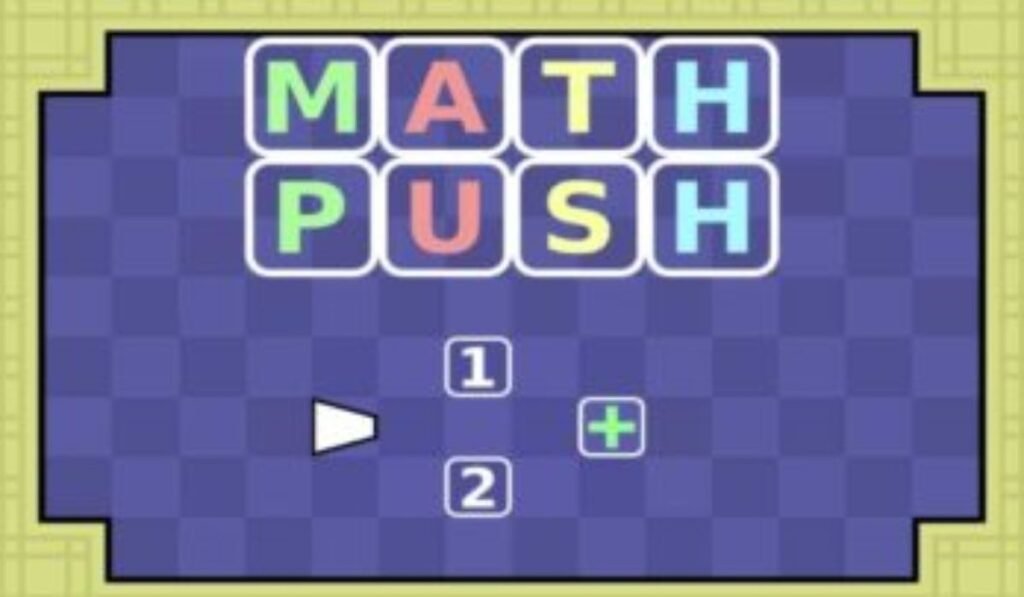
Productive screen time depends on what a child actually does, not just the presence of a screen. Focused math games require decisions and responses, differing meaningfully from passive video watching or random browsing online.
Setting boundaries helps too. Choose a specific game, set a short session, and ask kids to explain what they practiced. Balance remains essential alongside physical activity, creative play, social interaction, and consistent sleep.
- Screen time works best with clear screen time limits
- Choose one game and set a time limit
- Ask kids to explain what they learned
- Balance with offline learning and physical play
| Screen Time Checklist | Why It Matters |
| Pick one focused game | Keeps practice targeted, not random |
| Set a session limit | Prevents overuse and fatigue |
| Discuss the skill afterward | Turns play into real learning |
| Pair with offline activities | Supports balanced, healthy development |
Frequently Asked Questions
Is Math Playzone good for learning math?
Math Playzone Review 2026 shows how online games can make basic math practice more enjoyable for children.
What games can children play on this platform?
Math Playzone Review 2026 highlights browser-based games designed around different math topics and learning activities.
Is Math Playzone suitable for young children?
Math Playzone Review 2026 suggests the platform may suit children who enjoy learning through interactive activities.
Can Math Playzone help improve math skills?
Math Playzone Review 2026 explains that repeated game-based practice can support basic math learning and number confidence.
Does Math Playzone work on a browser?
Math Playzone Review 2026 describes the platform as offering browser-based activities that children can access online.
Is Math Playzone free to use?
Math Playzone Review 2026 indicates that access can depend on the specific games and features available on the platform.
Should parents let children use Math Playzone?
Math Playzone Review 2026 can help parents understand the platform’s games, learning purpose, and suitability for children.
Final Thought
This Math Playzone Review 2026 shows that the platform can genuinely support number recognition, addition, multiplication, and fraction practice when paired with the right game. Success depends on choosing titles that match a child’s real skill level rather than relying on age labels or arcade branding alone.
Overall, this Math Playzone Review 2026 confirms the platform works best as a supplementary tool, not a replacement for classroom instruction. Combine short, focused sessions with discussion, real-world practice, and balanced screen time, and children can build lasting math fluency while still enjoying genuinely playful practice.