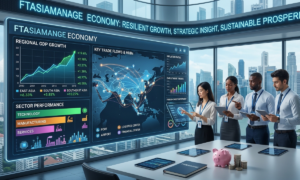
The modern economy is changing as businesses adopt digital tools, financial services become more accessible, and technology influences how people work and manage money. Understanding these developments can help individuals and organizations make better decisions. FTAsiaManagement Economy is a topic that brings these connected areas together, allowing readers to explore business activities, financial developments, and technological changes.
Brief Introduction to FTAsiaManagement Economy
FTAsiaManagement Economy is associated with the financial and economic information shared through the FTAsiaManagement website. The website describes its content as covering finance, cryptocurrency, technology, business developments, and global economic trends. Its purpose is to make complex subjects easier for readers to understand through informational articles and guides.
Explain the Connection Between Business, Finance, and Technology
Business, finance, and technology are closely connected because each area influences the others. Businesses need financial resources to operate, while financial systems help companies manage payments, investments, and daily expenses. Technology supports these activities through digital platforms, online banking, data management, and automated services.
Discuss Why Understanding Economic Developments Is Important Today
Economic developments affect everyday life in several ways. Changes in inflation, interest rates, employment, consumer spending, and international trade can influence household budgets and business decisions. For individuals, economic awareness can help with saving, spending, and financial planning. Business owners can use economic information to evaluate costs, understand customer demand, and prepare for market changes.
What Is FTAsiaManagement Economy?
FTAsiaManagement Economy refers to an informational topic focused on understanding the relationship between economic developments, business activities, financial knowledge, and technology. The term is connected with the FTAsiaManagement website, which presents itself as a source of educational articles and updates in these areas.
Explain the Meaning of FTAsiaManagement Economy
The meaning of FTAsiaManagement Economy can be understood by looking at its two main parts. FTAsia Management identifies the website and its related informational content, while economy refers to the wider system involving production, distribution, consumption, employment, trade, and financial activities. Together, the phrase describes an area of interest where readers can explore economic subjects through business, finance, and technology discussions.
Discuss Its General Focus on Economic and Financial Topics
The FTAsiaManagement website identifies several subjects that relate to its economic and financial coverage. These include financial markets, personal money management, cryptocurrency, digital payments, business developments, and economic trends. These topics are relevant because financial decisions and economic conditions influence both individuals and organizations. For example, changes in borrowing costs may affect business expansion, while developments in digital payments can change how customers purchase products and services.
Describe How Readers Can Explore Business and Technology Developments
Readers can explore FTAsiaManagement business and technology developments by starting with a specific question. Someone interested in entrepreneurship might research online business models, while a student studying finance could explore digital banking and financial markets. A practical approach is to compare information from different reliable sources, including official government publications, central banks, international organizations, and established research institutions.
Understanding the Role of Business in the Economy
Businesses are important parts of an economy because they produce goods, provide services, employ workers, and respond to customer needs. Their activities contribute to income generation, competition, innovation, and economic development. From local shops to international corporations, businesses influence how products reach consumers and how resources are used.
How Businesses Contribute to Economic Growth
Businesses contribute to economic growth by producing goods and services that people and other organizations need. Their operations create employment, generate income, encourage investment, and support related industries. For example, a manufacturing company may purchase materials from suppliers, employ production workers, use transportation services, and sell finished products to retailers. This creates economic activity across several connected sectors.
The Importance of Small and Large Businesses
Small and largeFTAsiaManagement businesses both contribute to economic activity, although they often operate differently. Small businesses include local retailers, independent service providers, restaurants, and online sellers. They can respond to local customer needs and create opportunities for self-employment and community development.
Large businesses generally operate on a wider scale and may have greater financial resources, larger workforces, and more complex supply chains. They can support extensive production, international trade, and research activities.
Business Strategies in a Changing Market
Businesses need to adjust their strategies when customer preferences, competition, technology, and economic conditions change. Some useful approaches include understanding customer needs, controlling operating costs, improving product quality, and using technology to organize business activities. Companies can also study market demand before introducing new products or entering unfamiliar markets.
The Importance of Finance in Economic Development
Finance supports economic activity by helping individuals, businesses, and governments manage money and access resources. It plays an important role in saving, borrowing, investment, production, and long-term planning. A good understanding of finance can help people make more responsible decisions and recognize the risks associated with financial activities.
Understanding Personal and Business Finance
Personal finance focuses on how individuals manage their income, expenses, savings, debts, and investments. Creating a budget, maintaining emergency savings, and controlling unnecessary spending are common parts of responsible money management. Business finance focuses on the financial needs of an organization. It includes managing operating expenses, paying employees, purchasing equipment, maintaining cash flow, and planning for future growth.
The Role of Financial Planning and Management
Financial planning helps individuals and businesses decide how to use their available resources. It involves setting realistic goals, estimating expenses, reviewing income, and preparing for unexpected costs. For a business, financial management may include preparing budgets, tracking sales, monitoring outstanding payments, and evaluating investment requirements. These activities help management understand whether the organization can afford its planned operations.
How Technology Is Transforming the Economy
Technology has changed how people communicate, purchase products, access financial services, and operate businesses. Digital tools allow organizations to process information, manage transactions, and connect with customers in different locations. The economic impact of technology depends on how effectively businesses and individuals use these tools.
Digital Transformation in Modern Businesses
Digital transformation refers to the adoption of digital technologies to improve business processes, services, and customer experiences. For example, companies may use cloud-based software to store documents, online platforms to communicate with customers, and digital inventory systems to monitor available products.
The Growth of Financial Technology (Fintech)
Financial technology, FTAsiaManagement Economy commonly known as fintech, describes the use of technology to provide or improve financial services. Examples include mobile banking applications, digital wallets, online payment systems, electronic transfers, and financial management software. These services can make certain financial activities more convenient. Customers may be able to check account information, transfer money, or pay bills without visiting a physical branch.
The World Bank’s Global Findex Database 2025 examines financial access and the use of payments, savings, borrowing, and digital services across 141 economies. This research demonstrates why digital connectivity and financial inclusion are important subjects when discussing modern finance.
Artificial Intelligence and Automation in Business
Artificial intelligence and automation are becoming important tools in many industries. Businesses can use AI-powered systems to analyze information, assist customer service, identify patterns, and support routine tasks. Automation can also help organizations handle repetitive activities, such as processing certain documents or organizing business records.
These technologies may improve productivity, but they also introduce challenges. Employees may need new skills, companies must protect sensitive information, and automated decisions require appropriate oversight. The International Monetary Fund explains that AI has the potential to influence productivity, employment, and income distribution.
The Relationship Between Business, Finance, and Technology
Business, finance, and technology are not separate parts of the modern economy. They work together to support production, transactions, communication, and organizational growth. Understanding their relationship makes FTAsiaManagement Economy more meaningful because it connects everyday business activities with wider financial and technological developments.
How These Three Sectors Work Together
Businesses need finance to purchase resources, pay employees, and maintain daily operations. They also use technology to manage customers, process payments, and organize information. Consider a small online clothing store. The owner needs financial planning to manage inventory costs and sales revenue. The store also requires an online platform to display products and a payment service to receive customer orders.
The Impact of Digital Innovation on Financial Activities
Digital innovation has made many financial activities faster and more accessible. Online banking, mobile wallets, electronic payments, and financial software allow users to complete tasks through digital channels. Businesses can use these systems to receive payments, review transactions, and maintain financial records. Customers may also benefit from convenient payment options and easier access to account information.
Major Economic Trends Shaping the Modern Market
Economic trends influence how companies operate, how consumers spend money, and how financial services develop. Understanding these trends helps readers recognize changes that may affect markets and business decisions.
Digital Payments and Online Banking
Digital payments and online banking have become important parts of modern financial services. They allow people and businesses to conduct transactions electronically through bank applications, payment platforms, and other supported systems. These services can reduce the need for physical cash handling and provide convenient ways to transfer money. However, users must remain aware of transaction fees, account security, and possible scams.
Cryptocurrency and Blockchain Developments
Cryptocurrency is a form of digital asset that uses cryptographic techniques. Many cryptocurrencies operate through blockchain networks, which maintain records of transactions using distributed digital systems. Blockchain technology has attracted attention because of its potential applications in areas such as transaction records, digital ownership, and financial infrastructure.
Global Trade and Digital Business Opportunities
Global trade connects FTAsiaManagement Economy businesses and consumers across national borders. Companies can purchase materials from international suppliers, sell products abroad, and provide digital services to customers in different countries. Technology has created additional opportunities for businesses to participate in international markets. Ecommerce platforms, cloud services, and online communication tools can help organizations reach customers beyond their local areas.
Benefits of Following FTAsiaManagement Economy
Following FTAsiaManagement Economy can help readers become more familiar with subjects that influence the modern financial and business environment. Its value depends on the quality, accuracy, and relevance of the information being explored.
Better Understanding of Financial Developments
Learning about financial developments helps readers understand subjects such as interest rates, inflation, savings, investment, and digital payments. This knowledge can make economic news easier to understand and encourage more careful financial planning.
Awareness of Business and Technology Trends
Following business and technology discussions can introduce readers to new tools, changing customer expectations, and different ways organizations operate. For example, learning about ecommerce, automation, and fintech can help readers understand why businesses increasingly consider digital solutions.
Improved General Economic Knowledge
FTAsiaManagement Economic knowledge helps people understand how markets, employment, production, and consumer spending are connected. Readers can also develop a better understanding of how international events and government policies may influence businesses and households.
Challenges and Risks in the Modern Economy
Although business and technology create opportunities, the modern economy also involves uncertainty. Individuals and organizations need to understand possible risks before making financial or operational decisions.
Economic Uncertainty and Market Changes
Economic conditions can change because of inflation, interest rates, international events, government decisions, and shifts in consumer demand. These changes may influence production costs, borrowing expenses, investment decisions, and business revenue. Companies can prepare by reviewing their budgets, monitoring market conditions, and avoiding excessive dependence on a single source of income or supplier.
Cybersecurity and Digital Financial Risks
Digital financial services involve sensitive information, including account details, personal records, and transaction histories. Cybercriminals may attempt to steal this information through phishing messages, fake websites, malicious software, and fraudulent payment requests. Individuals should use strong passwords, enable available security features, verify website addresses, and avoid sharing confidential account information.
Inflation and Financial Pressure
Inflation refers to a general increase in the prices of goods and services over time. When prices rise faster than household income, people may find it harder to maintain their usual standard of living. Businesses can also experience higher costs for materials, transportation, rent, and wages.
Who Can Benefit from FTAsiaManagement Economy?
FTAsiaManagement Economy can be relevant to different readers because business, finance, and technology influence many areas of modern life.
Students and Researchers
Students studying business, economics, finance, or information technology can explore these subjects to develop a broader understanding of the modern economy. They can use introductory articles to identify research topics and then consult academic publications and official economic data for deeper investigation.
Business Owners and Entrepreneurs
Business owners can learn about financial planning, ecommerce, digital payments, customer behavior, and technology adoption. These subjects may help them identify useful areas for further research when improving their operations or planning business growth.
Finance Professionals
Finance professionals may find discussions about fintech, digital banking, market developments, and financial technology relevant to their areas of interest. However, professional decisions require accurate data, current regulations, and industry-specific research rather than general blog information alone.
The Future of Business, Finance, and Technology
The future economy will continue to be influenced by technological innovation, changing customer needs, financial developments, and international cooperation. Although no one can predict every future development, several areas deserve attention when exploring FTAsiaManagement Economy.
Expected Developments in Digital Finance
Digital finance is likely to remain an important area of innovation. Online payments, mobile financial services, digital identity systems, and improved financial software may continue to influence how individuals and businesses manage transactions. The long-term benefits will depend on accessibility, appropriate regulation, reliable infrastructure, and effective consumer protection.
The Growing Role of Artificial Intelligence
Artificial intelligence may influence business operations through data analysis, automation, customer support, and decision-making assistance. Organizations may use these tools to improve productivity and identify patterns in large amounts of information. At the same time, businesses will need to consider data privacy, accuracy, workforce training, and human oversight.
Future Business Opportunities
Digital commerce, technology services, financial education, and cybersecurity are examples of areas that businesses may continue to explore. However, an emerging trend does not automatically represent a profitable business opportunity. Entrepreneurs should examine customer demand, competition, costs, regulations, and available resources before starting a new venture.
The Importance of Adapting to Economic Changes
Adaptability will remain important for individuals and businesses. People may need to develop new skills as technology changes the workplace, while companies may need to update their processes to meet customer expectations. Continuous learning, responsible financial planning, and careful evaluation of new technology can help people respond to changing conditions.
Final Thouhts
Business, finance, and technology are closely connected parts of the modern economy. Businesses depend on financial resources to operate, while technology provides tools for communication, payments, data management, and innovation. Understanding these connections helps readers see how different economic activities influence one another. Economic awareness helps individuals and organizations understand financial changes, business opportunities, and technological developments.
FAQs
Q1: What Is FTAsiaManagement Economy?
Ans: FTAsiaManagement Economy is an informational topic connected with business, finance, technology, and economic developments discussed through the FTAsiaManagement website. It helps readers explore these subjects and understand their relationship.
Q2: What Topics Does FTAsiaManagement Economy Cover?
Ans: The topic includes financial developments, business activities, digital technology, cryptocurrency, fintech, and global economic trends. The website describes these areas as part of its informational content.
Q3: How Does Technology Influence the Modern Economy?
Ans: Technology supports digital payments, online business operations, communication, and financial services. It can improve productivity and accessibility while creating challenges involving cybersecurity and data protection.
Q4: Why Is Financial Knowledge Important for Businesses?
Ans: Financial knowledge helps businesses manage expenses, monitor cash flow, prepare budgets, and evaluate investment requirements. It also supports better planning during uncertain economic conditions.
Q5: Can Beginners Learn About Business and Finance Through This Topic?
Ans: Yes. Beginners can use FTAsiaManagement Economy as an introductory subject for learning basic business, financial, and technology concepts. They should also consult reliable educational and official sources for further research.