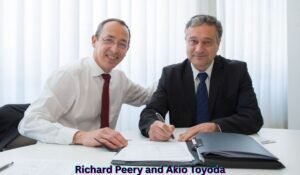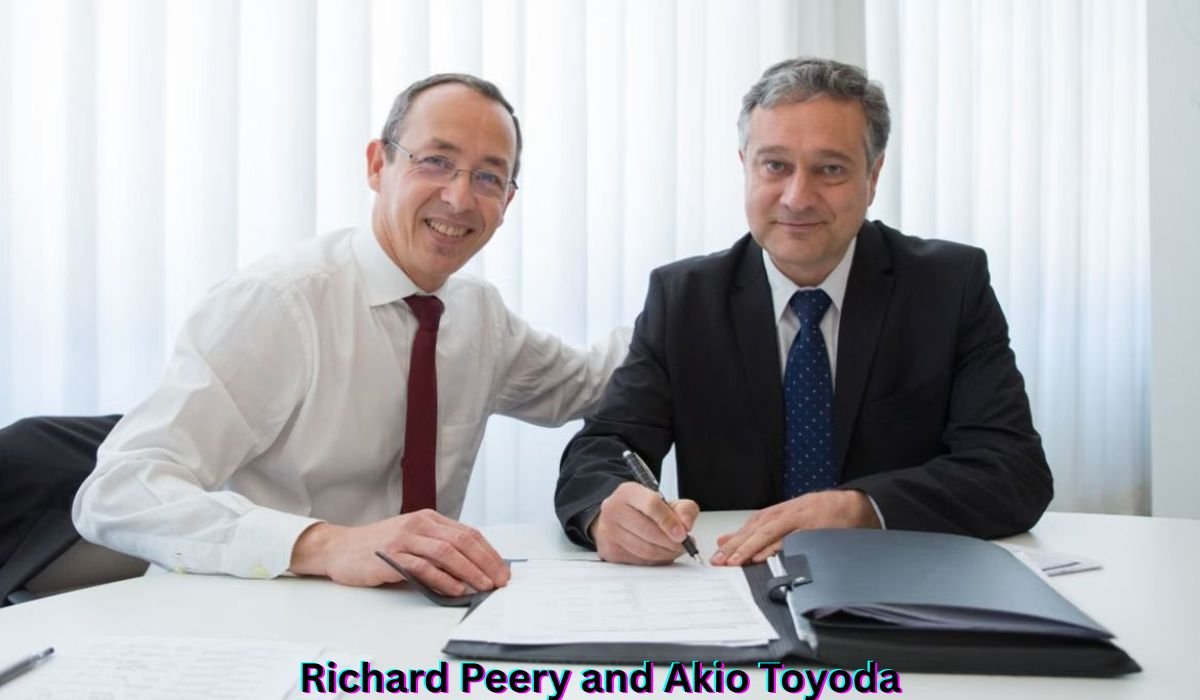
Richard Peery and Akio Toyoda built remarkable careers in completely different worlds, yet both offer proof that patience and vision pay off. One shaped Silicon Valley’s landscape through commercial real estate, while the other guided Toyota through decades of global change. Their stories remind us that lasting success rarely happens overnight.
This article looks closely at Richard Peery and Akio Toyoda side by side, tracing their backgrounds, career milestones, and the lessons hidden in their choices. From farmland deals in California to factory floors in Japan, their paths never crossed, but their approach to long-term thinking tells a similar story.
| At a Glance | Richard Peery | Akio Toyoda |
| Field | Commercial real estate | Automotive industry |
| Known For | Silicon Valley office parks with John Arrillaga | Leading Toyota Motor Corporation |
| Country | United States | Japan |
| Education | Brigham Young University, Stanford University | Keio University, Babson College |
Who Is Richard Peery?

Richard Peery is an American entrepreneur known for turning raw land into thriving commercial property across Silicon Valley. Coming from a family rooted in banking and financial services, he learned business fundamentals early. His father, H. Taylor Peery, worked in banking and property investment, shaping Richard’s understanding of markets long before college.
Rather than finishing his MBA at Stanford University after attending Brigham Young University, Peery chose hands-on experience. He tested small ventures before entering full-scale property investment, a decision that built the entrepreneurial mindset guiding his later success in real estate development.
- Attended Brigham Young University and Stanford University
- Grew up influenced by his father H. Taylor Peery’s banking career
- Chose real-world business experience over completing an MBA
- Developed an entrepreneurial mindset early in life
Richard Peery’s Early Background
Peery’s early years combined family influence with independent ambition. His father’s success in banking and financial services gave him a front-row seat to financial decision-making, while his own small ventures built confidence long before he entered commercial real estate on a larger scale.
- Learned financial decision-making from his family’s background
- Explored small business ideas before entering real estate
- Built practical skills instead of relying only on formal education
Richard Peery’s Impact on Silicon Valley
Richard Peery’s greatest impact came through his partnership with John Arrillaga, when the pair purchased farmland and converted it into office parks. Their timing lined up with Silicon Valley’s rise as a global technology sector hub, turning ordinary land into some of the most valuable commercial property in California.
According to Forbes and Fortune, their work created a substantial commercial property portfolio that housed companies driving the region’s technological expansion. Peery’s approach proved that long-term investment often outperforms chasing short-term transactions in real estate development.
- Partnered with John Arrillaga starting in the 1960s
- Converted farmland into office developments
- Featured in Forbes and Fortune coverage of Silicon Valley’s growth
- Built a lasting commercial property portfolio
Real Estate and Long-Term Investment
Peery’s success rested on long-term investment rather than quick property flips. Land acquisition, property leasing, and development took years to mature, but the payoff was enormous once Silicon Valley became a global technology center. Patience, more than luck, defined his property investment strategy.
- Focused on location value before it became obvious to others
- Prioritized property leasing and development over fast resale
- Showed how economic development rewards patient investors
Who Is Akio Toyoda?
Akio Toyoda, born in 1956, belongs to the family behind Toyota and built his career from the ground up. He studied law at Keio University, then earned an MBA from Babson College in the United States, blending legal insight with international business training before joining Toyota Motor Corporation in 1984.
Rather than jumping straight into leadership, Toyoda worked across manufacturing, sales, marketing, purchasing, product development, and information technology. That broad exposure across international operations prepared him for the executive management challenges he would later face atop a global automotive manufacturing giant.
- Member of the Toyota founding family
- Studied law at Keio University
- Earned an MBA from Babson College in the United States
- Joined Toyota Motor Corporation in 1984
Education and Entry Into Toyota
Toyoda’s education combined legal training with American-style business education, an uncommon mix for a future automotive industry leader. His early Toyota years touched nearly every department, from manufacturing to international operations, giving him practical industry knowledge instead of a fast-tracked path to the top.
- Balanced legal studies with an MBA from Babson College
- Gained experience across multiple Toyota departments
- Built industry knowledge through direct involvement, not shortcuts
Akio Toyoda’s Leadership at Toyota
Akio Toyoda became Toyota president in 2009, stepping into corporate leadership during one of the toughest periods the automotive industry has faced. He navigated economic changes, supply-chain challenges, and rising demand for lower-emission transportation while protecting Toyota’s reputation for manufacturing quality and reliability.
Known personally as “Morizo” in motorsports circles, Toyoda brought genuine passion for driving into his corporate role. His leadership blended engineering discipline with an emotional appreciation for mobility, helping Toyota adapt to shifting consumer preferences and a rapidly changing global automotive market.
- Became Toyota president in 2009
- Led through supply-chain challenges and industry transformation
- Raced under the name Morizo, reflecting his motorsports passion
- Pushed for stronger manufacturing quality and reliability
Becoming Toyota’s President
Stepping into the presidency in 2009 meant leading Toyota through global economic uncertainty. Toyoda focused on strengthening automotive technology, vehicle development, and consumer trust. In 2023, he moved from president to chairman of the board, continuing his influence over Toyota’s global operations from a new position.
- Took charge during a difficult period for global markets
- Strengthened vehicle development and automotive technology
- Transitioned to chairman of the board in 2023
Richard Peery and Akio Toyoda: Different Industries, Similar Lessons
Richard Peery and Akio Toyoda operated in entirely separate industries, yet both understood that meaningful results take time. Peery’s real estate development depended on Silicon Valley’s slow transformation, while Toyoda’s automotive manufacturing decisions shaped vehicle production and powertrains for years down the road.
Both leaders also proved there’s no single formula for success. Peery built influence through entrepreneurship and strategic investment, while Toyoda rose through decades of corporate experience and international operations. Their leadership journeys highlight different routes toward the same destination: lasting impact.
| Comparison Point | Richard Peery | Akio Toyoda |
| Path to Success | Entrepreneurship and property investment | Decades of corporate experience |
| Key Strategy | Long-term investment in land | Long-term planning in vehicle development |
| Signature Partnership | John Arrillaga | Toyota Motor Corporation |
| Guiding Principle | Location value over time | Manufacturing quality over time |
- Both relied on long-term thinking over quick wins
- Represented different paths: entrepreneurship versus corporate leadership
- Showed that industry knowledge takes years to build
Long-Term Thinking
Long-term thinking connects both careers closely. Land acquisition and development, much like designing new powertrains, requires strategic planning that spans years, not months. Peery and Toyoda both bet on where their industries were heading rather than reacting to short-term financial results.
- Prioritized strategic planning over immediate profits
- Anticipated market trends before competitors did
- Accepted years-long timelines as part of doing business
Their Influence Beyond Business
Richard Peery’s influence reaches beyond commercial real estate into education and philanthropy. Along with his wife, Mimi Peery, and his siblings, he supported the H. Taylor Peery Institute of Financial Services at Brigham Young University through a $3 million endowment, funding financial education and internships for students.
Akio Toyoda’s public influence is tied to Toyota’s global reach and his personal enthusiasm for motorsports and automotive culture. Both men show that business leadership can extend into philanthropy, education, and industry development, shaping communities well beyond quarterly earnings or corporate headlines.
- Supported the H. Taylor Peery Institute of Financial Services
- $3 million endowment funded financial education and internships
- Toyoda’s motorsports passion shaped Toyota’s public image
Education, Philanthropy, and Public Influence
Education and philanthropy round out Richard Peery’s legacy alongside his real estate success. The Peery family’s endowment reflects a commitment to financial education at Brigham Young University, proving that entrepreneurial wealth can fund educational opportunities that outlast any single business deal.
- Endowment supports financial research and student internships
- Reflects the broader Peery family legacy
- Connects business success to lasting educational opportunities
Read Also This: Marillyn Hewson and Igor Olenicoff: Exploring Their Backgrounds, Careers, and Family Connection
What Can We Learn From Their Careers?
Richard Peery and Akio Toyoda teach us that understanding change matters more than reacting to it. Peery recognized Silicon Valley’s potential before it became obvious, while Toyoda guided Toyota through technological development and shifting customer expectations without losing sight of quality and reliability.
Both careers also emphasize adaptability and deep industry knowledge. Real estate investment demands understanding of financing and location value, while automotive leadership requires mastery of manufacturing, engineering, and global markets. Their decades-long journeys prove that a lasting reputation is earned, not given.
| Lesson | Richard Peery | Akio Toyoda |
| Patience | Waited decades for Silicon Valley to grow | Waited decades to reach the presidency |
| Preparation | Learned real estate through direct experience | Rotated through nearly every Toyota department |
| Vision | Saw value in undeveloped farmland | Saw value in emotional, driver-focused engineering |
- Understand market trends before they become obvious
- Build deep industry knowledge through direct experience
- Stay adaptable as technology and consumer preferences shift
Business Lessons From Two Leaders
The clearest lesson from both men is patience paired with preparation. Peery’s property management skills and Toyoda’s corporate experience didn’t appear overnight; both spent years learning their industries before achieving recognition. Their careers reward those willing to think in decades, not quarters.
- Success builds gradually through experience, not shortcuts
- Preparation matters as much as opportunity
- Long careers often outperform quick wins
Frequently Asked Questions
What is the connection between these two business leaders?
Richard Peery and Akio Toyoda represent different paths shaped by business leadership, strategy, and long-term professional success.
What are their main career backgrounds?
Richard Peery and Akio Toyoda built their careers through different industries, responsibilities, and leadership experiences over time.
How did they become successful?
Richard Peery and Akio Toyoda achieved recognition through business decisions, professional experience, and strong leadership within their respective fields.
What companies are associated with them?
Richard Peery and Akio Toyoda are connected with notable business organizations and careers that reflect their different professional backgrounds.
What leadership styles do they have?
Richard Peery and Akio Toyoda show different leadership approaches shaped by their industries, responsibilities, experiences, and business goals.
Why are their stories interesting to readers?
Richard Peery and Akio Toyoda offer an interesting comparison between different career journeys, leadership roles, and approaches to business success.
What can people learn from their careers?
Richard Peery and Akio Toyoda show how experience, strategic thinking, dedication, and leadership can shape long-term professional journeys.
Final Thoughts
Richard Peery and Akio Toyoda prove that business success doesn’t follow one blueprint. One built his fortune through commercial real estate patience, the other through decades of corporate leadership at Toyota. Different industries, different countries, yet strikingly similar values around timing, discipline, and long-term thinking guided both careers forward.
Looking back at Richard Peery and Akio Toyoda together highlights how varied paths can lead to lasting influence. Whether through property development or global automotive manufacturing, their stories encourage anyone building a career to stay patient, stay curious, and trust that meaningful results take real time to unfold.