
QuikConsole.com is turning heads as a cloud-based console management platform that pulls developer tools, automation, real-time monitoring, cloud storage, and connected devices into a single dashboard. Instead of hopping between five different tabs, users get one login and one clear picture of everything running behind the scenes.
Whether you’re a developer chasing bugs, an IT team watching distributed systems, or a household juggling gaming devices and streaming devices, QuikConsole.com aims to simplify the chaos. This article walks through how it works, what it offers, and whether it’s worth the switch for your setup.
How QuikConsole com Actually Works
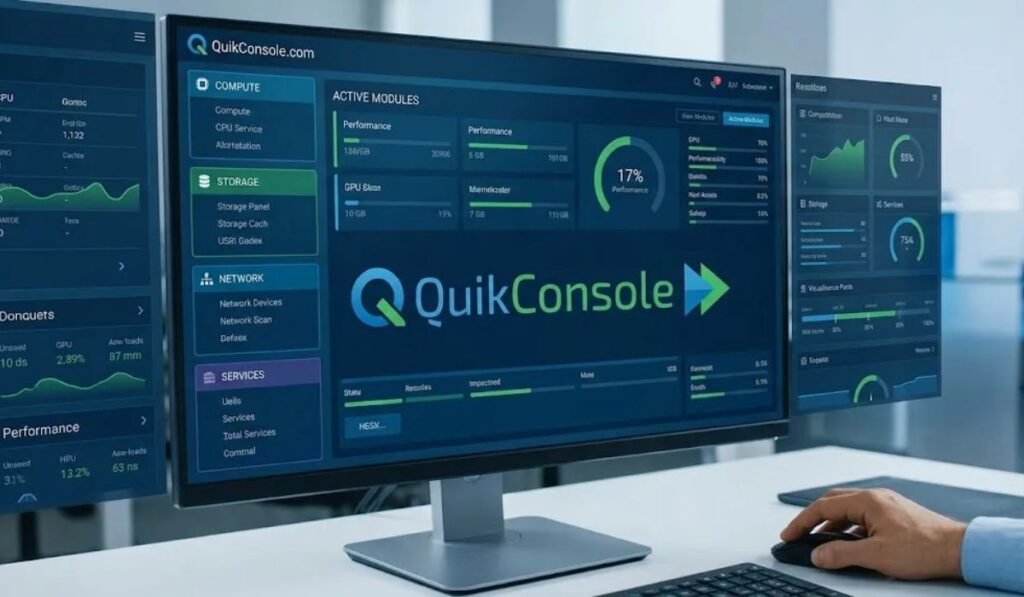
The idea is console management without the clutter connecting your applications, servers, or devices, then building a dashboard around what actually matters to your workflow. Everything from system activity to device settings lives in one place instead of scattered logins.
This setup benefits IT teams and SaaS businesses running several disconnected systems already. Rather than bouncing between tools to reconcile data, teams get a single source of truth. It’s centralization done with purpose, not just another app added to an already crowded technology stack.
- Connect apps, servers, and devices in one step
- Build a dashboard tailored to your workflow
- Reduce reliance on scattered logins and tools
Core Features Inside the QuikConsole com Dashboard

The dashboard is where performance metrics, alerts, and system activity show up side by side, so nobody needs five open tabs just to understand what’s happening. AI-assisted analytics flags unusual activity patterns before they turn into real problems.
Developers get debugging support, error detection, and activity tracking across common programming languages and frameworks. Add in log management, cloud storage for historical data, customizable widgets, and cross-device syncing across laptop and mobile phone, and the dashboard becomes genuinely useful daily.
| Feature | What It Does |
| Real-time monitoring | Tracks performance across connected systems |
| AI-assisted analytics | Flags anomalies and unusual patterns |
| Log management | Archives and searches historical data |
| Customizable widgets | Prioritizes metrics that matter to your team |
| Cross-device syncing | Keeps data consistent on laptop and mobile |
Automation Tools You Can Build Inside QuikConsole com
Automation here runs on automation rules tied to event triggers, say, an alert firing when a system crosses performance thresholds, so your team gets notifications before users start complaining. Routine maintenance tasks like log cleanup and backup verification run quietly in the background.
Beyond alerts, workflow automation can loop in the right teammate when an error repeats or sort logs by application automatically. Startups and SaaS companies benefit most, since small teams covering large operational tasks gain real hours back each week.
- Trigger alerts based on performance thresholds
- Automate log cleanup and backup verification
- Route notifications to the right team member automatically
Managing Devices and Gaming Consoles Through One Login
Beyond developer tools, QuikConsole.com also handles device management for gaming console management, covering PlayStation, Xbox, and Nintendo Switch, plus streaming platforms like Roku, Apple TV, and Fire TV all from a single login instead of separate remotes and apps.
Parents get a practical use case here: tracking screen time and setting usage limits without touching every device physically. Just confirm device compatibility before assuming full support, since this feature set doesn’t always mirror the developer-focused tools exactly.
| Device Type | Examples Supported |
| Gaming consoles | PlayStation, Xbox, Nintendo Switch |
| Streaming devices | Roku, Apple TV, Fire TV |
| Common controls | Screen time, usage limits, storage checks |
Security Controls Worth Checking Before You Connect Anything
Because a centralized console touches multiple systems at once, security carries extra weight. Encrypted connections, two-factor authentication, and role-based access control limit what each person can see or change, while API integrations are expected to run through secure channels for business data.
Access monitoring and audit trails let admins track who accessed what and when essential for compliance requirements. Before connecting anything sensitive, confirm current security certifications directly rather than relying on summaries or marketing pages alone.
- Enable two-factor authentication and encrypted connections
- Set role-based access control for your team
- Review audit trails and compliance certifications regularly
Who Gets the Most Out of QuikConsole com
DevOps teams benefit from centralized debugging, log data, and CI/CD-adjacent monitoring, while remote IT teams get visibility across distributed systems and endpoints without constant dashboard switching. SaaS companies and startups combine automation with performance monitoring while running lean.
Households with several connected devices get simpler oversight too. That said, a solo developer doesn’t need the same setup as a team managing dozens of endpoints matching the plan to your actual use case matters more than enabling every feature at once.
| User Type | Primary Benefit |
| Developers / DevOps | Debugging, error detection, CI/CD visibility |
| Remote IT teams | Distributed system monitoring |
| SaaS companies & startups | Automation plus performance monitoring |
| Households | Gaming and streaming device oversight |
Setting Up QuikConsole com Step by Step
Getting started follows a familiar sequence: account creation, account verification, then connecting your applications, servers, or devices so the dashboard actually has data to show. Skipping this step leaves you staring at empty widgets with nothing useful to analyze.
Next comes dashboard configuration around your real priorities, followed by security settings like two-factor authentication and access controls. Build automation configuration for tasks you already know eat up time, then check alerts and logs regularly during the first few weeks.
- Create and verify your account first
- Connect apps, servers, and devices before configuring
- Enable security settings, then build automation gradually
Advantages and Trade-Offs to Weigh First
Less tool switching is the clearest way monitoring, automation, and device management sit together, which speeds up troubleshooting since data doesn’t need manual comparison across systems. Cost efficiency also improves as separate subscriptions get consolidated into one plan.
On the flip side, expect a learning curve and some features locked behind paid plans. Integration availability varies by system, and steady internet connectivity is required throughout worth noting for teams working in the field with patchy access.
| Pros | Cons |
| Less tool switching, faster troubleshooting | Learning curve for new staff |
| Cost efficiency from consolidation | Some features behind paid plans |
| Centralized alerts and logs | Requires constant internet connectivity |
Read Also This: SFFareboxing Schedules by SportsFanfare: Your Guide to Boxing Events and Fight Cards
QuikConsole com vs. Running Separate Tools

The real comparison is against your current stack of monitoring tools, logging tools, and access controls spread across separate dashboards and separate logins. A unified console removes that data fragmentation by putting everything behind one interface instead of four or five.
For a team already happy with two or three specialized tools, the transition cost might not be worth it yet. For a growing team accumulating tools piecemeal, system consolidation early can prevent fragmentation from getting worse down the line.
- Audit your current tool stack honestly first
- Weigh transition cost against ongoing fragmentation
- Consolidate early if your stack keeps growing unmanaged
Frequently Asked Questions
What is this website about?
QuikConsole.com is a website that provides information about its features, setup process, and practical uses for users.
How does the website work?
You can use QuikConsole.com to understand its main functions, setup steps, and common uses in simple terms.
What features does it provide?
QuikConsole.com explains its key features and shows how each option can help with different user needs.
Is it easy to set up?
The setup process for QuikConsole.com is explained clearly, helping new users understand the basic steps without confusion.
Who can use this website?
QuikConsole.com may be useful for people who want simple information about console features, setup, and everyday applications.
What are its real-world uses?
The practical uses of QuikConsole.com depend on its features, settings, and how users apply them for different tasks.
Where can I learn more about it?
You can read more about QuikConsole.com to understand its features, setup process, and real-world uses before getting started.
Final Thoughts
QuikConsole.com brings a genuinely useful idea to the table: fewer logins, less fragmentation, and a clearer view of systems and devices that used to live in separate corners. Whether it’s the right fit depends entirely on how tangled your current setup already is.
For teams drowning in scattered tools, QuikConsole.com could save real hours every week. For those with a lean, working stack already, it’s worth testing before committing fully to confirm compatibility, security certifications, and pricing details directly rather than relying on secondhand summaries.