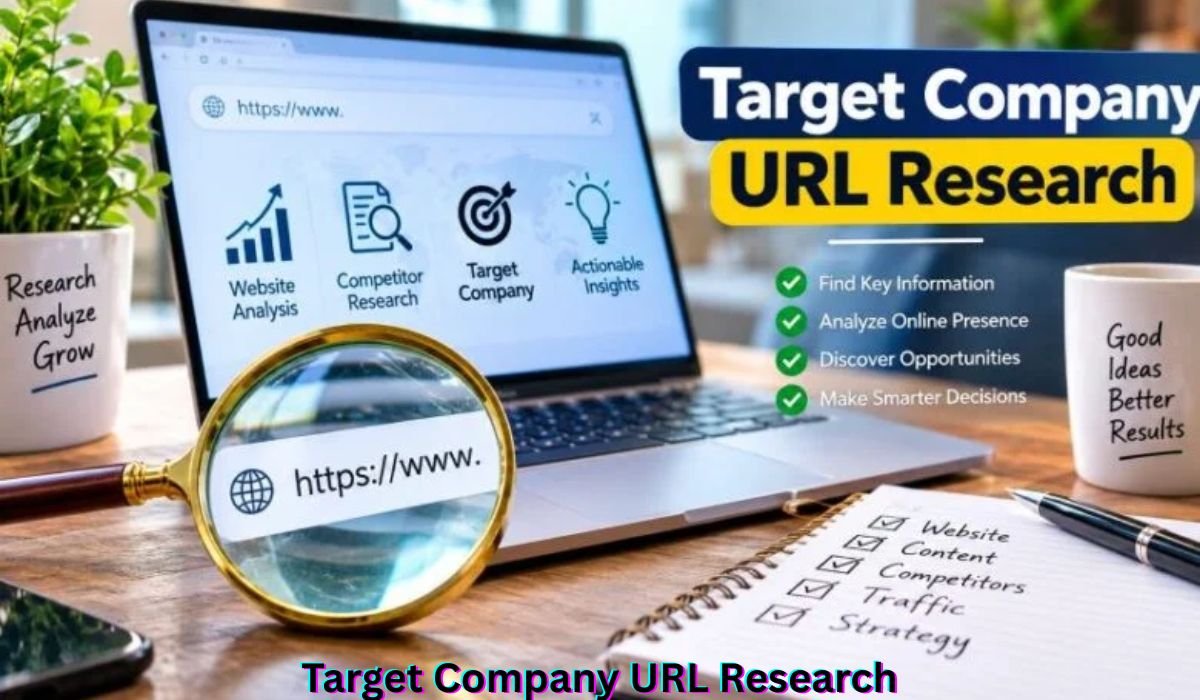
Finding the real website behind a business name sounds easy until similar names, outdated pages, and directory listings crowd the results. Target Company URL Research is built to cut through that noise and give you a sensible starting point quickly.
This guide explains how Target Company URL Research works, what it can and cannot do, and whether it fits your workflow. Think of it as a friendly walkthrough from someone who has tested the tool and wants you to avoid common mistakes.
Short Answer: What Is Target Company URL Research?
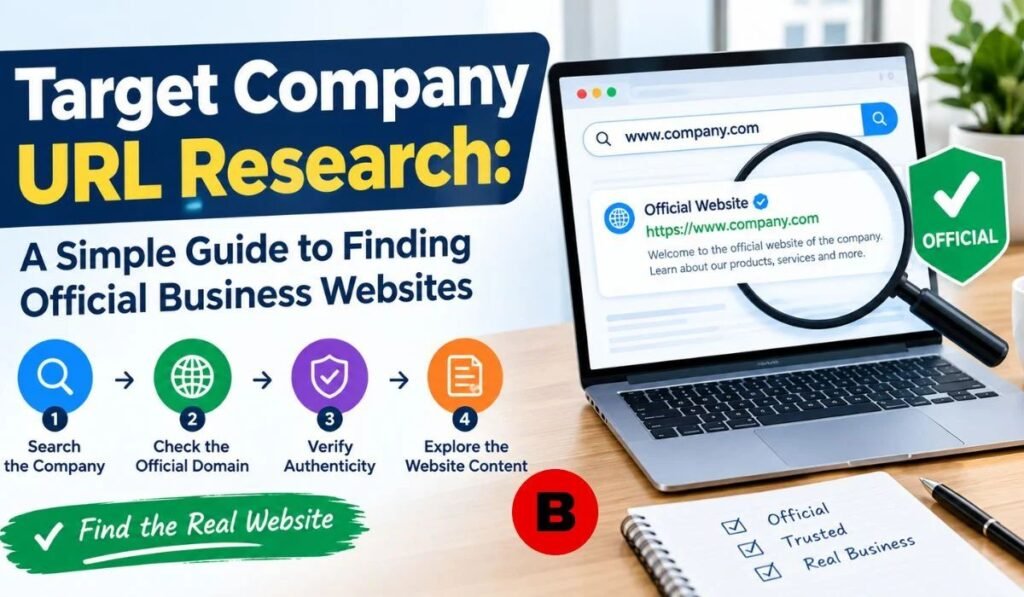
It is a free, browser-based company domain finder that turns business names into likely official websites. You get a match confidence score, alternative suggestions, and spreadsheet-ready output.
- Handles up to 25 names per run
- Needs no signup
- Exports results as CSV
Quick Facts
Here is the fast version for anyone skimming. The table covers the essentials, so you can decide in seconds whether the tool suits your company research needs.
- Free with no card required
- Powered by an outside lookup source
- Independent of the retailer
| Detail | Information |
| Main purpose | Find likely domains from names |
| Cost | Free |
| Account required | No |
| Bulk lookup | Up to 25 names per run |
| Lookup source | Clearbit Autocomplete |
| Careers Finder | Yes |
| Full enrichment | No |
| Own paid API | No |
What Does Target Company URL Research Do?
You type in a company name, and the tool returns the most likely candidate domain. It is a simple company name for a domain mapping job, done quickly and without fuss.
That helps with everyday tasks. The workflow is name, suggested domain, score, manual check, approved website.
- B2B prospect research
- CRM data cleanup
- Recruitment and supplier checks
How Does Target Company URL Research Work?
Paste your list into the lookup box. The site removes duplicates and strips legal company suffixes such as Ltd, LLC, Inc, PLC, and GmbH, which makes company name normalization cleaner before searching.
Then it queries its lookup source and returns matches. Each row can show:
- Original and matched names
- Suggested domain
- Score and label
What Do the Match Scores Mean?
A similarity score tells you how closely your typed name resembles the returned company name. Higher usually means closer. But a close resemblance is not the same as being the right business, so read the labels sensibly.
| Label | Meaning | What to do |
| High | Strong name similarity | Quick spot check |
| Medium | Possible match | Review it |
| Low | Weak match | Treat as a lead |
Is the Match Score Proof of Company Identity?
No. A score is only a signal. It cannot prove that a website belongs to the exact business you meant, especially when many firms share a popular word like “Atlas.”
Extra care is needed with:
- Common business names
- Subsidiaries and renamed companies
- Brands owned by larger groups
What Data Source Does Target Company URL Research Use?
The live lookup relies on Clearbit Autocomplete, a public company-autocomplete endpoint that returns candidate names and domains. The site’s developer guide explains this setup openly, which is refreshing transparency.
So this is a company lookup source for domains, not a deep business intelligence database.
- Name-to-domain focus
- External dependency
- No proprietary dataset claimed
What Information Can the Tool Return?
The main output is the company domain, and that is the whole point. Do not expect a full company profile with financial details or contact data.
Outside its scope:
- Annual revenue and employee counts
- Funding rounds and executive lists
- Phone numbers, addresses, and verified emails
If you need full company enrichment, pick a broader data platform.
Can You Search Multiple Companies at Once?
Yes. The tool supports batch company search with up to 25 names per run, which saves real time compared with checking each business separately.
Typical uses:
- A recruiter with 15 employers
- A salesperson with 20 prospects
- A researcher reviewing an industry list
Can You Export the Results?
Yes. The CSV export makes the tool far more practical for spreadsheet work. Export fields can include the original name, matched name, domain, score, and match label.
Open the file in:
- Microsoft Excel
- Google Sheets
- Apple Numbers
- CRM import tools
What Is the Careers Page Finder?
The Careers Finder builds likely careers page URLs from a company domain, using common paths such as /careers or /jobs. It is a shortcut, not a guarantee, because some sites are structured differently.
- Saves a few clicks
- Links may not always work
- Some firms use third-party recruitment platforms
Does the Careers Finder Show Active Vacancies?
No. It does not confirm whether a company is hiring. It only points you toward a probable jobs page, which you must open and read yourself.
Keep in mind:
- A page can exist with zero openings
- Vacancies may sit on another platform
- Always check the live page
What Is the Brand Directory?
The Brand Directory is a curated company directory, separate from the live lookup. It groups known companies by category and was last checked in August 2026, according to the site.
- Search by name, keyword, or industry
- Handy for brand discovery
- Not a complete industry list
What Are the Companies by Country Feature?
This section filters the curated directory by headquarters country, helping you sketch a basic list of firms from a market such as the UK, the US, or Germany.
- Country-based company search
- Quick market snapshots
- Not an official company registry
Is Target Company URL Research Free?
Yes. The main lookup is free, and the site says you need no account, no credit card, and no paid subscription. No paid plan is currently listed for the tool.
- Free access
- No registration
- No hidden checkout step
Does Target Company URL Research Have an API?
The site says it does not sell its own commercial API. Instead, its guide explains how the underlying autocomplete source behaves, which is useful if you are curious about the technology.
- No proprietary API product
- Technical documentation available
- Mainly a browser-based utility
Does the Site Store Submitted Company Lists?
According to the site, names go from your browser straight to the external lookup endpoint. It also states that submitted lists are not logged on its servers or sold.
- Stated privacy model only
- Read the current policy first
- Be careful with sensitive company data
Who Runs Target Company URL Research?
The About page credits “Team Target Company URL Research,” and some guides carry the name Rizwan Aslam. That confirms article authorship, not legal ownership.
- No registered operating company shown
- No verified revenue or staff figures
- Do not guess missing details
What Contact Details Are Public?
The Contact page lists several channels for technical support, incorrect URLs, missing companies, and partnership questions.
- Email: support@rankboster.com
- WhatsApp: +880 13371-88832
- Telegram: @rankboster0
Is Target Company URL Research Connected to Target Corporation?
No. The site states it is independent from Target Corporation, the US retailer. “Target” here means a company you are researching, as in a target account or target prospect.
- Entirely different meaning
- No retail link
- Pure sales prospecting terminology
How Old Is TargetCompanyURLResearch.com?
Third-party WHOIS records show a registration date of June 11, 2026, so the domain age is young as of late 2026. Youth alone does not signal danger; it just means less history.
- Registrar: Hostinger Operations, UAB
- Valid Let’s Encrypt SSL certificate
- Limited domain history
Is Target Company URL Research Safe?
There is not enough evidence to call it fraudulent. The tool asks for no payment and uses HTTPS. One automated trust service gives a low score, mainly because of the new domain and limited traffic.
- Positive: SSL, free access
- Caution: little reputation data
- Verdict: use normal care
What Are the Main Benefits?
No account wall
You can start immediately without registering, which keeps quick company website lookup tasks smooth and removes the usual signup friction that slows busy researchers down.
Bulk lookup
Checking up to 25 names in one run turns a tedious chore into a quick task, especially when your spreadsheet is already full of unresolved business names.
CSV export
Results move straight into your spreadsheet, so cleaning and importing data feels natural instead of requiring awkward copying between browser tabs and files.
Match confidence
The confidence labels show which rows are probably fine and which need attention, so you spend your review time where mistakes are most likely.
Alternative domains
Instead of accepting one answer, you can compare alternative domains and choose the best fit, which helps with rebranded or regionally split companies.
Careers-page shortcuts
Generated links let recruiters and job seekers jump toward likely jobs pages faster, even though each link still needs a quick manual confirmation.
Free access
With no paid plan listed, students, small teams, and solo freelancers can test the tool without budget approval or financial commitment.
What Are the Main Limitations?
Results can be wrong
Similar names can lead to unrelated businesses, so a returned domain is only a suggestion. Always open important matches and confirm the company yourself.
Small firms may be missing
New or low-profile companies may not appear in the underlying source, which means some lookups return nothing or return a weaker, unrelated alternative.
It depends on an external endpoint
If the outside lookup source changes or stops working, the tool can be affected. That dependency sits beyond the site’s direct control.
It is not a legal verification service
A domain does not confirm registration or ownership. For business due diligence, use government registries, filings, and regulator databases instead.
It is not full company enrichment
Revenue, headcount, funding, executives, and contacts fall outside its scope. Choose a dedicated company data platform when you need that depth.
The domain is young
Its independent reputation record is still thin. That is not a red flag by itself, but it justifies sensible caution with sensitive lists.
Pros and Cons
A quick side-by-side helps you weigh the trade-offs honestly before adding the tool to your routine.
- Strengths: free, fast, exportable
- Weaknesses: needs checking, limited depth
- Best as a first pass
| Pros | Cons |
| Free to use | Results still need checking |
| No registration | Common names cause bad matches |
| Up to 25 names per run | Not a full company database |
| CSV export | Depends on external source |
| Confidence labels | Young domain history |
| Alternative matches | Careers links may fail |
Who Should Use Target Company URL Research?
It suits anyone who already has company names and wants likely websites quickly. For high-value decisions, add extra verification.
- Sales teams, recruiters, marketers
- CRM managers and researchers
- Students doing basic research
| User | Best use |
| Sales teams | Fill missing domain fields |
| Recruiters | Find websites and career pages |
| Marketing teams | Clean campaign lists |
| Researchers | Reach primary sources faster |
Can It Replace Google Search?
Not completely. Treat it as a time-saving first pass, then use Google Search when names are common, domains conflict, or a business has recently rebranded.
- Better for speed
- Google wins on tricky cases
- Use both together
Can It Replace an Official Company Registry?
No. A domain finder locates a probable website, while an official company registry verifies legal details. They answer very different questions.
- Check registries and filings
- Review legal notices
- Rely on primary sources
Read Also This: Yonopress Review 2026: A Complete Guide to Its Purpose, Features, and Value
Can You Trust Every Result?
No, and you should not. The tool offers candidates, and you verify the important ones. High-confidence matches may need only a glance, medium-confidence matches deserve a closer look, and low-confidence matches need real care.
- Spot-check high matches
- Review medium matches
- Treat low matches as leads
Frequently Asked Questions
How can I find a company’s official website?
Target Company URL Research helps you find official company websites using business names and match results.
Can I find company URLs without searching manually?
Target Company URL Research saves time by finding likely website matches without checking every company manually.
How do I check if a company website is correct?
Target Company URL Research shows match confidence to help you review whether a website belongs to the intended company.
Can I find company career pages easily?
Target Company URL Research helps create careers-page links so you can access company job pages more quickly.
Can I export company website research?
Target Company URL Research lets you export domain research results for easier tracking, review and future use.
Is this tool useful for lead generation?
Target Company URL Research can support lead generation by organizing company websites and helping you research potential business prospects.
Who should use this company research tool?
Target Company URL Research is useful for SEO professionals, recruiters and marketers who need company websites for research and outreach.
Final Thoughts
Target Company URL Research works best as a quick, free assistant for turning company names into likely websites. It saves time on repetitive lookups, gives helpful scores, and exports cleanly. Just remember that every suggestion is a lead, not a verdict.
Used wisely, Target Company URL Research can speed up prospecting, recruiting, and list cleanup without costing a cent. Pair it with manual checks and official sources, and you will get reliable results while avoiding the errors that careless automation often creates.