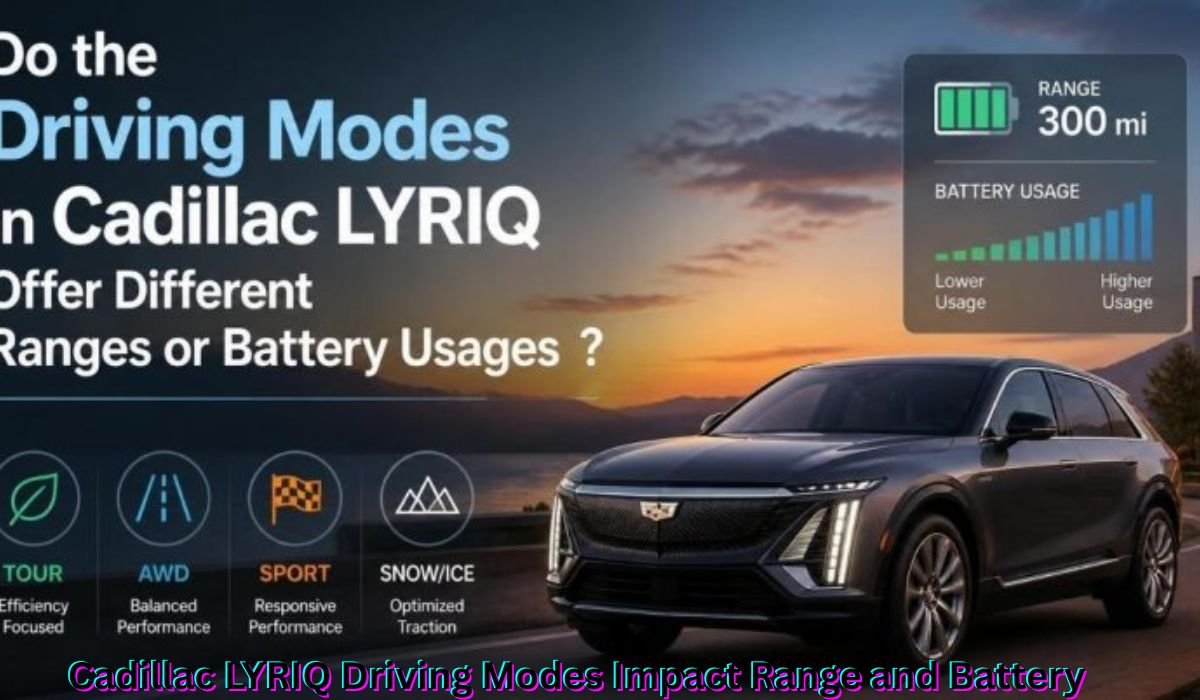
Every Cadillac LYRIQ owner eventually wonders whether switching driving modes changes how far the electric SUV can travel. Understanding Cadillac LYRIQ Driving Modes Impact Range and Battery behavior helps drivers make smarter choices daily. This guide breaks down what actually happens inside the electric vehicle when modes change.
Many assume Sport Mode drains the battery charge faster while Tour Mode always saves miles. The truth about Cadillac LYRIQ Driving Modes Impact Range and Battery performance is more nuanced. Driving behaviour, weather, and energy consumption patterns matter just as much as the selected drive mode.
1. What Changes When a LYRIQ Drive Mode Is Selected?
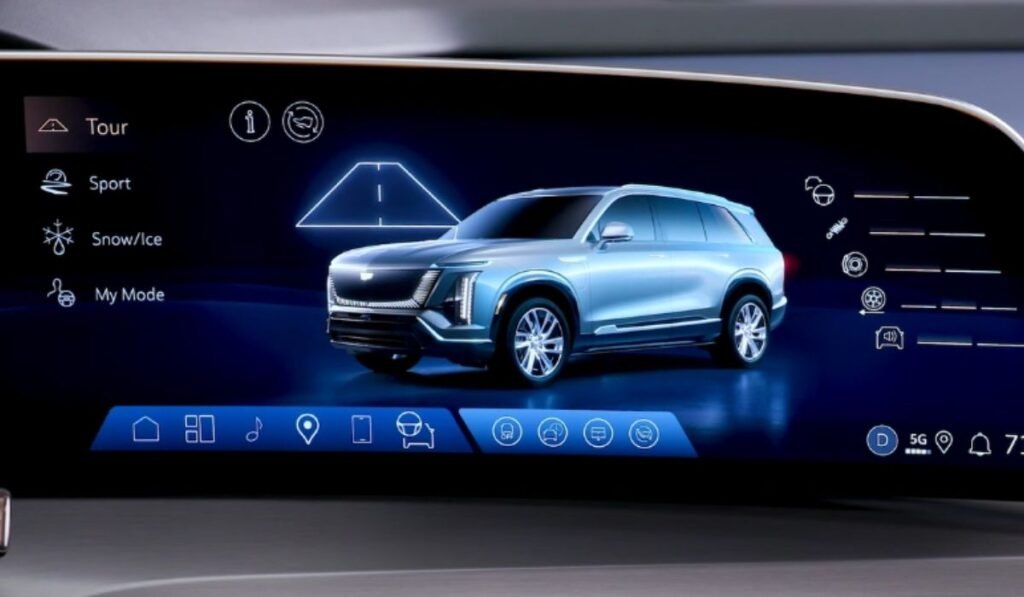
Selecting a mode adjusts accelerator response, steering behaviour, and traction management rather than the battery capacity itself. The electric motor reacts differently based on calibration.
Battery usage becomes an indirect outcome. The vehicle still pulls electricity from the same high-voltage battery, but consumption rates shift with driver input and vehicle response settings.
- Modes adjust accelerator calibration, not energy storage
- Power demand changes based on driving style
- Traction management varies by selected mode
A. Battery Capacity Does Not Change
The LYRIQ doesn’t carry separate battery capacity for different modes. Starting at the same state of charge, switching modes never adds stored electricity. Only the rate of energy consumption shifts depending on how power gets delivered to the wheels.
B. Driving Behaviour Creates the Bigger Difference
Two LYRIQs using identical modes can post very different efficiency results. Driving habits gradual versus aggressive matter more than the mode name itself. Consistent driving remains the strongest predictor of real-world battery consumption across any journey.
2. Tour Mode as the Everyday Efficiency Choice
Tour Mode suits everyday driving with balanced vehicle performance, skipping the sharpness of Sport Mode or specialized Snow/Ice Mode behavior. It’s a sensible default for commuting and errands.
The tour isn’t a dedicated economy setting, though. Poor driving habits still cause high power consumption. Combining it with gradual acceleration delivers the best range efficiency for daily trips.
- Balanced accelerator response for routine driving
- Works well for commuting and shopping trips
- Pairs best with moderate speeds
A. Why Smooth Acceleration Helps
Moving a heavy electric SUV demands energy proportional to acceleration intensity. Smooth acceleration spreads power demand evenly across the drive. Tour Mode encourages this naturally, though the driver ultimately controls how firmly the accelerator control gets pressed.
B. Tour Mode on Longer Journeys
For long-distance travel, maintaining stable speed beats frequent mode-switching. Constant acceleration and deceleration wastes energy that could extend driving range. Tour supports routine long journeys, but wind, temperature, and climate control use still influence outcomes.
| Driving Mode | Primary Purpose | Typical Range Impact |
| Tour Mode | Balanced everyday driving | Neutral to efficient |
| Sport Mode | Responsive, quick acceleration | Reduces range if used aggressively |
| Snow/Ice Mode | Traction and control | Lower range mainly due to winter conditions |
| My Mode | Personalized settings | Depends entirely on configuration |
3. Sport Mode and Increased Power Demand
Sport Mode sharpens vehicle response, giving easier access to the electric powertrain’s performance. It doesn’t force constant maximum electricity draw, steady driving keeps consumption reasonable even in this setting.
The difference grows when drivers repeatedly use sharp acceleration. High-power acceleration demands substantial energy, and frequent bursts reduce available driving range noticeably over a full trip.
- Sharper accelerator calibration for quick response
- Doesn’t automatically maximize power consumption
- Impact depends on frequency of hard acceleration
A. Why Fast Acceleration Costs Range
Electric motors deliver torque almost instantly, enabling strong acceleration. That performance draws heavily from the high-voltage battery. Repeated fast acceleration increases consumption per mile, translating into a shorter estimated range across the full journey.
B. Can Sport Still Be Driven Efficiently?
Yes, choosing Sport doesn’t force hard driving. Gentle accelerator control within this mode keeps energy consumption close to Tour levels. The efficiency gap shrinks considerably when speed and acceleration stay controlled throughout the drive.
C. When Sport Mode Makes Sense
Sport suits drivers wanting sharper responsive driving without guilt. There’s no need to avoid it entirely. However, when range planning matters or charge runs low, Tour Mode and gentler driving behaviour remain more practical choices.
4. Snow/Ice Mode Is About Traction, Not Extra Miles
Snow/Ice Mode exists for control, not conserving battery energy. Power delivery gets managed carefully to reduce wheel slip on slippery surfaces, which can make acceleration feel gentler but isn’t primarily about saving range.
Drivers often notice lower estimated range in this mode. The reason usually relates to winter conditions rather than the mode’s programming or traction management settings themselves.
- Prioritizes vehicle control over efficiency
- Reduces wheel slip during acceleration
- Range drops mostly from cold weather, not the mode
A. Cold Batteries and Winter Range
Cold temperatures reduce electric vehicle efficiency significantly. Energy gets used warming the battery toward optimal operating conditions. Combined with cabin heating demand, less remaining energy stays available for actual propulsion during winter trips.
B. Snow Creates Additional Resistance
Driving through snow or slush increases rolling resistance compared to dry roads. Electric motors work harder to maintain movement. Winter tyre pressure changes with falling temperatures too, and correct tyre pressure helps minimize unnecessary resistance.
C. Safety Should Come Before Range
Drivers shouldn’t avoid Snow/Ice Mode to preserve a few miles. When road conditions demand extra traction, vehicle control outweighs minor charge savings. Proper range planning before winter trips matters more than mode hesitation mid-journey.
5. My Mode Can Produce Different Results
My Mode personalizes the driving experience where supported, letting drivers select preferred vehicle characteristics instead of one fixed combination. This flexibility means it can’t be labeled efficient or inefficient by default.
A mild personalised settings configuration paired with careful driving delivers efficient results. A sharper configuration combined with aggressive driving habits can produce considerably higher battery consumption instead.
- Fully customizable vehicle response options
- Outcome depends on chosen configuration
- Works differently for every driver’s preferences
A. Setting Up My Mode for Daily Use
Drivers using My Mode regularly can build it around comfort and predictable accelerator response. A setup favoring smooth acceleration and gentle vehicle performance often works best for daily commuting and routine travel needs.
B. Testing Your Personal Configuration
Recording energy usage patterns across similar trips helps evaluate a configuration. Compare battery consumption between Tour and your My Mode setup under matching weather, traffic, and climate control conditions for fairer results.
6. Regenerative Braking Changes the Efficiency Picture
Regenerative braking converts movement energy back into electricity during slowdowns, a major electric vehicle advantage. This regenerative driving feature reduces reliance on friction braking, especially useful in city and urban driving environments.
Regeneration improves energy management but doesn’t create free power. Energy losses still occur whenever electricity moves between battery, motors, and wheels during the recovery process.
- Recovers some energy during braking
- Reduces friction braking wear
- Doesn’t eliminate all energy losses
A. One-Pedal Driving in Traffic
One-Pedal Driving lets the LYRIQ slow down once the accelerator releases. In stop-and-go traffic, this creates frequent regenerative braking opportunities while reducing dependence on conventional friction braking systems throughout urban driving.
B. Regeneration Cannot Recover Every Loss
Accelerating hard to highway speed then slowing quickly returns only partial energy recovery. Avoiding unnecessary fast acceleration upfront proves more efficient than relying on regeneration to compensate for wasted power consumption afterward.
7. Highway Speed Can Matter More Than Drive Mode
Highway speed often influences driving range more than the selected mode ever could. Faster travel increases aerodynamic resistance, requiring more electrical power to maintain that pace consistently over distance.
A driver could use Tour Mode yet still see disappointing efficiency while traveling quickly. This proves mode selection can’t be separated from actual highway driving habits and speed choices.
- Aerodynamic resistance increases sharply at higher speeds
- Mode alone doesn’t guarantee efficiency
- Speed control matters more on highways
A. Steady Speed Helps Reduce Waste
Constantly changing speed forces repeated power demand for acceleration. Maintaining stable speed where traffic allows reduces unnecessary energy use significantly. Smooth highway driving proves more valuable for range than frequent mode adjustments.
B. Sport Versus Tour Is Not the Whole Story
A gently driven LYRIQ in Sport Mode can outperform one driven aggressively in Tour Mode. This example shows drive mode selection cannot be separated from actual driving behaviour and chosen highway speed.
| Factor | Effect on Range |
| Highway speed | Higher speed increases aerodynamic resistance |
| Driving behaviour | Aggressive habits raise power consumption |
| Winter conditions | Cold reduces battery energy availability |
| Climate control | Heating/cooling adds auxiliary energy consumption |
8. Heating and Air Conditioning Use Battery Energy
Not all stored electricity moves the wheels directly. Cabin climate systems also draw from the same battery energy supply, including cabin heating and air conditioning during extreme weather.
The impact grows noticeable on shorter trips, where climate control can represent a larger share of total energy consumption compared to longer everyday travel journeys.
- Cabin heating and cooling both draw power
- Impact is largest on short trips
- Consider climate control in range planning
A. Preconditioning Can Help Before Departure
While connected to charging equipment, preconditioning the cabin beforehand reduces immediate battery energy demand after departure. This proves especially helpful during extreme cold temperatures or hot weather requiring major cabin temperature adjustment.
B. Moderate Climate Settings Are More Practical
Drivers needn’t sacrifice comfort entirely to save miles. Using climate control sensibly is realistic. When remaining charge runs low, avoiding extreme cabin temperature settings helps reduce auxiliary energy consumption without major discomfort.
9. Why the Range Display Keeps Changing
The estimated range shown isn’t a fixed guarantee, it’s a prediction based on remaining energy and recent driving behaviour. After higher consumption per mile, the range display often falls faster than expected.
This explains why drivers shouldn’t blame every range display shift solely on a drive mode change. Multiple operating conditions influence that number continuously throughout a trip.
- Range display reflects predictions, not fixed values
- Recent driving behaviour shapes the estimate
- Numbers adjust constantly during travel
A. Battery Percentage Tells a Different Story
Battery percentage represents remaining charge, while estimated range converts that energy into expected distance. The same state of charge can correspond to different mileage figures depending on operating conditions and recent energy usage patterns.
B. Look at Consumption Over Complete Trips
Measuring energy consumption across entire journeys gives better insight than single readings. Repeating identical routes several times helps average out traffic, wind, and temperature effects for more reliable driving data.
10. RWD and AWD Should Not Be Confused With Drive Modes
Rear-wheel drive (RWD) and all-wheel drive (AWD) represent physical powertrain configuration differences, not temporary settings. These hardware distinctions affect efficiency and driving range far more permanently than any mode selection.
An AWD model uses extra propulsion hardware delivering power through multiple axles. This creates different range ratings compared to the single-motor version, regardless of chosen drive mode.
- RWD and AWD are hardware differences
- Not adjustable through mode selection
- Affects baseline official range figures
A. Different Models Can Have Different Range Ratings
Two LYRIQs can look similar while carrying different motors, wheels, or vehicle specifications. These differences shape both official range and real-world range independently of Tour Mode or Sport Mode choices.
B. Compare Like With Like
Owners measuring drive mode efficiency should compare identical vehicles whenever possible. Using the same powertrain configuration removes variables, making it easier to isolate how driving behaviour genuinely affects battery consumption.
| Configuration | Motors | Typical Range Trend |
| Rear-wheel drive (RWD) | Single motor | Generally higher official range |
| All-wheel drive (AWD) | Dual motor | Slightly lower range, more traction |
Read Also This: What Makes Technewsoutlets.com USA Appealing to Readers?
11. Practical Ways to Get More Range From a LYRIQ
Choosing Tour Mode is a smart starting point, paired with suitable driving habits. Gradual acceleration and sensible cruising speeds reduce unnecessary power demand across most everyday travel situations.
Keeping tyres properly inflated and avoiding unnecessary vehicle weight also helps. Route planning around charging stations reduces pressure to drive aggressively near low remaining charge levels.
- Maintain proper tyre pressure regularly
- Avoid carrying unnecessary heavy items
- Plan routes around charging stations
A. Watch Energy Use Instead of Guessing
The vehicle’s energy information helps drivers understand personal consumption per mile. Comparing multiple journeys reveals whether speed, acceleration, climate control, or weather drives the biggest impact on charge management overall.
B. Choose the Mode for the Situation
Tour Mode suits ordinary travel, Sport Mode offers responsive driving, and Snow/Ice Mode handles slippery conditions. My Mode adds personalised settings flexibility drivers can switch freely based on road and charging needs.
| Tip | Benefit |
| Use gradual acceleration | Lowers power consumption |
| Maintain tyre pressure | Reduces rolling resistance |
| Plan around charging stations | Supports better range planning |
| Choose mode by situation | Balances comfort and range efficiency |
Frequently Asked Questions
What driving mode affects battery use the most?
Cadillac LYRIQ Driving Modes Impact Range and Battery through power delivery, acceleration, and driving response.
Does Sport mode reduce driving range?
Cadillac LYRIQ Driving Modes Impact Range and Battery can be noticeable when Sport mode encourages faster acceleration and higher energy use.
Can Tour mode help save battery power?
Cadillac LYRIQ Driving Modes Impact Range and Battery by providing balanced power delivery for comfortable and efficient everyday driving.
Does Snow and Ice mode use more battery?
Cadillac LYRIQ Driving Modes Impact Range and Battery because traction control may adjust power delivery to maintain better grip.
Does changing modes affect the battery itself?
Cadillac LYRIQ Driving Modes Impact Range and Battery mainly through energy consumption rather than causing direct battery damage.
Which mode is better for longer trips?
Cadillac LYRIQ Driving Modes Impact Range and Battery with steady driving, smooth acceleration, and moderate speeds helping preserve available range.
Can driving habits matter more than the selected mode?
Cadillac LYRIQ Driving Modes Impact Range and Battery because speed, temperature, traffic, climate control, and acceleration strongly affect energy consumption.
Final Thoughts
Understanding Cadillac LYRIQ Driving Modes Impact Range and Battery behavior comes down to recognizing that modes shape driving character, not stored energy itself. Driving behaviour, weather, and highway speed consistently outweigh mode selection alone in determining real-world outcomes.
Owners who focus on smooth acceleration, sensible climate control, and situational mode choices get the most from their electric SUV. Ultimately, mastering Cadillac LYRIQ Driving Modes Impact Range and Battery dynamics is about combining the right mode with genuinely mindful driving habits.